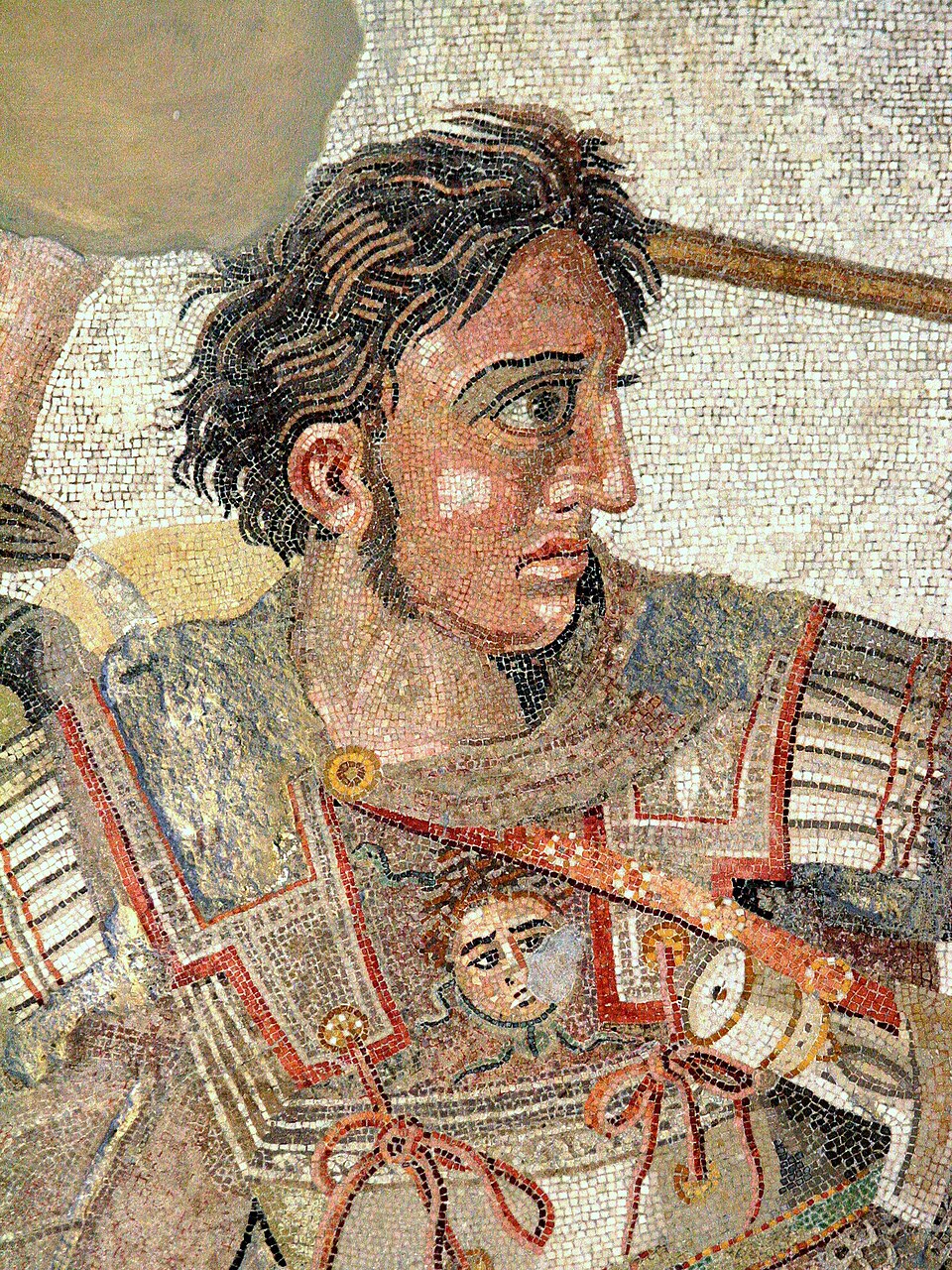
Alexander the Great's Reign: Key Facts and Enduring Impact
Few figures in history command the same awe and scholarly fascination as Alexander III of Macedon, famously known as Alexander the Great. His brief but meteoric reign, spanning little more than a decade from 336 to 323 BCE, irrevocably altered the course of the ancient world. From the dusty battlefields of Persia to the exotic lands of India, Alexander forged an empire of unparalleled scale, disseminating Greek culture across continents and laying foundations that would influence civilizations for centuries to come. His strategic genius, audacious spirit, and vision left an indelible mark, making his story a perpetual subject of study for leadership, warfare, and cultural exchange.
The Genesis of a Conqueror: Early Life and Ascension
Born in 356 BCE in Pella, the ancient capital of Macedon, Alexander was the son of King Philip II, a brilliant military tactician who had already transformed Macedon into a dominant power in Greece, and Olympias, a fierce and ambitious princess of Epirus. From his earliest days, Alexander was groomed for greatness. His education was overseen by none other than the philosopher Aristotle, who instilled in the young prince a deep appreciation for Greek philosophy, science, medicine, and literature, particularly the epics of Homer, with Achilles serving as a lifelong idol.
Alexander's formal military training began early, participating in campaigns alongside his father. His baptism by fire came at the Battle of Chaeronea in 338 BCE, where, at just 18, he commanded the Macedonian left wing, playing a crucial role in defeating the allied Greek forces. This experience solidified his reputation as a formidable leader. When Philip II was assassinated in 336 BCE, Alexander, then 20, swiftly ascended to the throne, ruthlessly consolidating his power by eliminating rivals and quashing rebellions in the Greek city-states. His immediate actions demonstrated a decisive and unyielding will, signaling the dawn of an era of unprecedented conquest.
Forging an Empire: Key Campaigns and Conquests
Alexander’s true legacy was forged in the crucible of battle. His primary objective, inherited from his father, was the invasion of the vast Persian Empire, a rival that had long cast a shadow over the Greek world. In 334 BCE, Alexander crossed the Hellespont with a relatively small but highly disciplined army, embarking on a campaign that would stretch for thousands of miles and span multiple continents.
- The Battle of Granicus (334 BCE): His first major victory against Persian satraps, opening the way into Asia Minor.
- The Battle of Issus (333 BCE): A decisive encounter where Alexander personally confronted and routed King Darius III of Persia, who fled the battlefield, leaving his family behind.
- Conquest of Egypt (332 BCE): After bypassing the formidable siege of Tyre, Alexander marched into Egypt, where he was welcomed as a liberator from Persian rule and crowned Pharaoh. Here, he founded the city of Alexandria, which would become a beacon of learning and commerce for centuries.
- The Battle of Gaugamela (331 BCE): The climactic confrontation against Darius III’s vastly superior forces. Alexander's brilliant tactical maneuvering led to another stunning victory, effectively dismantling the heart of the Persian Empire and allowing him to capture Babylon, Susa, and Persepolis.
Despite his empire's immense size, Alexander was not content. He pressed eastward into Central Asia and eventually into India (327 BCE). His troops, weary from years of campaigning, eventually compelled him to turn back after the fierce Battle of the Hydaspes against King Porus. Alexander’s military genius lay not just in his battlefield tactics but also in his ability to inspire unwavering loyalty from his troops, his adaptability to diverse terrains and enemies, and his audacious, often personally risky, leadership.
A Legacy Beyond Battle: Impact on the Ancient World
Alexander’s reign was more than just a series of military conquests; it was a catalyst for profound cultural transformation, often referred to as the Hellenistic Age. He envisioned a world where Greek and Eastern cultures could intertwine, advocating for integration rather than mere subjugation. This vision had several lasting impacts:
- Hellenization: The most significant cultural legacy was the widespread dissemination of Greek language (Koine Greek), philosophy, art, architecture, and political ideas across his vast empire. New cities, many named Alexandria, served as vibrant centers of Hellenistic culture, fostering intellectual exchange and cosmopolitanism. Scholars keen to Unveiling Alexander the Great: Empire, Maps & Legacy often highlight this fusion.
- Economic and Trade Expansion: By unifying such a vast territory, Alexander facilitated unprecedented trade routes, connecting the Mediterranean with India. This led to a flourishing of commerce, new markets, and the exchange of goods and ideas across previously disparate regions.
- Cultural Synthesis: Alexander encouraged his soldiers to marry local women, adopted Persian customs and dress, and incorporated Persian nobles into his administration. This controversial policy aimed to create a unified ruling class, a blend of East and West, though it often met with resistance from his Macedonian veterans.
- Influence on Future Empires: The administrative structures and military strategies pioneered by Alexander profoundly influenced subsequent empires, most notably the Roman Empire, which admired and emulated aspects of his organizational prowess. His conquests also paved the way for the spread of new religions, including early Christianity, which utilized the common Koine Greek language to great effect.
While modern headlines often focus on contemporary legal proceedings and social issues, such as the Alexander Brothers Trial: Sex Trafficking Verdict Nears, the historical narratives of figures like Alexander the Great provide a stark contrast, reminding us of the enduring human capacity for both monumental achievement and destructive power.
The Enigma of Alexander's Death and Succession
After conquering an empire that stretched from Greece to India, Alexander the Great died tragically young, in Babylon, in June 323 BCE, at the age of 32. The circumstances of his death remain one of history’s greatest mysteries. While some accounts attribute it to natural causes, such as fever, malaria, or typhoid, others speculate about poisoning. The suddenness of his demise left a colossal power vacuum and a clear lack of an obvious successor.
His final, whispered words, reportedly "to the strongest" or "to the strongest spear," were a prophetic testament to the ensuing chaos. Without a designated heir, his generals, known as the Diadochi, plunged the empire into decades of bitter civil wars. These conflicts ultimately fractured Alexander's vast dominion into several Hellenistic kingdoms, including the Ptolemaic Kingdom in Egypt, the Seleucid Empire in Asia, and the Antigonid Kingdom in Macedon and Greece. Though his empire swiftly disintegrated, the Hellenistic cultural and political landscape he created persisted for centuries, a testament to the profound impact of his whirlwind reign.
In conclusion, Alexander the Great's reign, though brief, was a period of unparalleled transformation. His audacious military campaigns redrew the maps of the ancient world, while his policies of Hellenization and cultural synthesis created a vibrant, interconnected Hellenistic civilization. He was a complex figure—a brilliant strategist, a visionary leader, and at times, a ruthless conqueror. His life story continues to inspire debates about leadership, the nature of empire, and the lasting power of a single individual to reshape the course of human history.